Why Turmeric Shines in Soups
Turmeric brings a warm, earthy depth and a beautiful golden hue to soups. Unlike dry rubs or quick sautés, soup gives turmeric time to meld with other ingredients, creating a broth that feels both comforting and nourishing. A well-made turmeric soup can be a satisfying dinner or a meal-prep staple, ready to reheat on busy days.
One of the joys of turmeric soup is its flexibility. You can stir it into lentil dal, simmer it with chicken and vegetables, or blend it into a creamy coconut-based bowl. The spice’s gentle bitterness, when handled right, balances rich ingredients and brightens lighter ones, making it a natural fit for all kinds of soups.
Essential Techniques for Silky Turmeric Soup
To get the most flavor from turmeric without a raw, powdery taste, it helps to cook the spice briefly in fat before adding liquid. Many soup recipes call for adding turmeric with aromatics like garlic, ginger, or onions and cooking until fragrant—usually a minute or two. This step, sometimes called blooming, deepens the spice’s warmth and helps it disperse evenly through the broth. One approach is to sauté onions, leeks, carrots, and celery until soft, then add minced garlic, fresh turmeric or ground turmeric, and other seasonings like poultry seasoning or thyme, cooking for another minute until the kitchen smells toasted and aromatic.
Not every recipe requires a separate blooming step. Turmeric can also be stirred directly into the pot with broth and then simmered gently for 30–40 minutes, which gives the spice time to infuse the liquid. This works well for quick stovetop soups where you want minimal fuss. The key is to avoid adding a large amount of dry turmeric at the very end, which can leave a gritty, slightly bitter finish.
For a naturally creamy texture without cream, consider simmering starchy vegetables like potatoes in the soup. The starches released help thicken the broth just a little, giving it body. If you prefer a richer mouthfeel, coconut milk is a dairy-free option that adds a subtle sweetness and silky consistency—perfect for pairing with turmeric’s earthy notes.
- Sauté aromatics first: cook onions, leeks, or shallots in olive oil until soft, then add garlic, ginger, and turmeric and cook until fragrant.
- Let the soup simmer: give turmeric at least 20–30 minutes of gentle bubbling to mellow its raw edge.
- Add potatoes or coconut milk for creaminess: potatoes release starch, while coconut milk adds richness without dairy.
Sources: Nyssa's Kitchen, Plays Well With Butter, Sugar & Garlic
Vegetarian Turmeric Soup Recipes
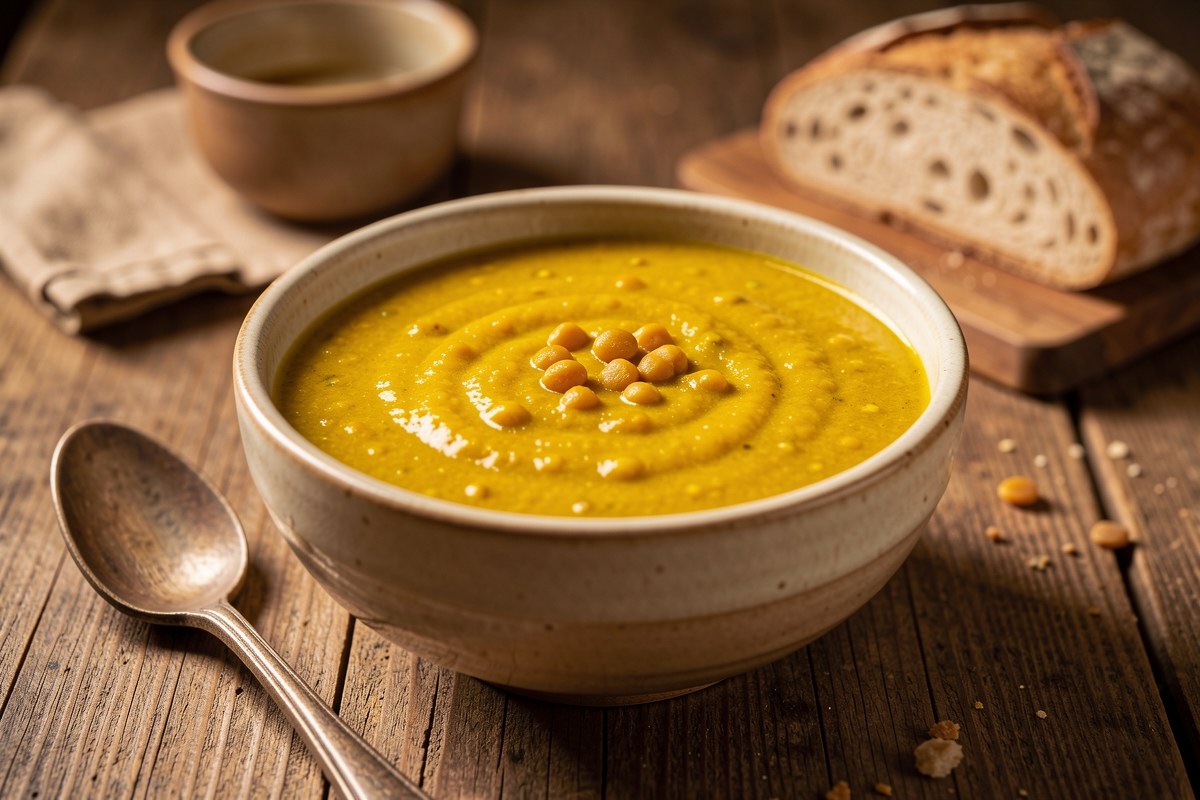
Turmeric’s affinity for legumes and vegetables makes it easy to create a satisfying vegetarian soup. A classic turmeric lentil soup mimics the spiced dals of Indian cuisine, where red or yellow lentils cook with turmeric, cumin, and sometimes a splash of coconut milk. The lentils break down and thicken the broth naturally, turning the soup into a hearty bowl that pairs well with rice or crusty bread.
You can adapt any chicken turmeric soup to a vegetarian version by swapping the chicken for chickpeas, white beans, or extra vegetables. For a golden vegetarian soup base, sauté onion, celery, and carrot in olive oil, then add garlic and turmeric. Pour in vegetable broth, add lentils or beans, and let everything simmer until the vegetables are tender. Stir in a handful of spinach or a squeeze of lemon at the end for brightness.
If you want a creamy turmeric soup without dairy, blend cooked vegetables with coconut milk or a splash of oat milk. A mix of roasted butternut squash, sweet potato, and turmeric yields a silky, golden purée that is both comforting and easy to prepare.
Sources: Nyssa's Kitchen
Golden Vegetarian Soup Recipe
For a specific vegetarian golden soup, try this creamy coconut-turmeric vegetable soup. It serves 4 and takes about 40 minutes from start to finish.
Ingredients: 2 tablespoons olive oil, 1 large onion (chopped), 2 carrots (diced), 2 celery stalks (diced), 3 cloves garlic (minced), 1 tablespoon fresh ginger (grated), 1 teaspoon ground turmeric, 1 can (14 oz) coconut milk, 4 cups vegetable broth, 1 cup red lentils (rinsed), 4 cups baby spinach, salt and pepper to taste, and lemon wedges for serving.
This soup is a satisfying meal on its own or served with crusty bread.
- Heat olive oil in a large pot over medium heat. Add onion, carrots, and celery; cook until soft, about 5 minutes.
- Add garlic, ginger, and turmeric; cook for 1 minute until fragrant.
- Stir in coconut milk, vegetable broth, and red lentils. Bring to a boil, then reduce heat and simmer for 20-25 minutes until lentils are tender.
- Add spinach and stir until wilted. Season with salt and pepper.
- Serve with a squeeze of lemon.
Sources: Nyssa's Kitchen
Chicken and Meat-Based Turmeric Soups
Turmeric’s warmth pairs beautifully with chicken, making turmeric chicken soup a beloved classic. A simple stovetop version begins by sautéing onions, leeks, carrots, and celery in olive oil until the leeks are soft and just beginning to caramelize. Next, add garlic, turmeric, and other aromatics such as poultry seasoning, cooking for about a minute until fragrant. Pour in chicken broth and add chicken pieces—whether raw breasts or thighs that cook in the soup, or leftover shredded rotisserie chicken—and simmer until the chicken is cooked through and the flavors have melded.
For a golden soup with noodles, stir in egg noodles or your favorite pasta during the last part of cooking. If you plan to freeze leftovers, it’s best to cook noodles separately and add them just before serving. Otherwise, they can absorb too much broth and become mushy when reheated.
Coconut milk adds a comforting twist, making the broth slightly creamy and dairy-free. Simply stir it in during the last few minutes of simmering. Fresh ginger often accompanies turmeric, lending a lively, slightly spicy note that brightens the whole pot.
- Build the base: sauté onions, leeks, carrots, and celery in olive oil until soft and slightly caramelized.
- Bloom the spices: add garlic, turmeric, and poultry seasoning (if using) and cook for 1–2 minutes until fragrant.
- Simmer with broth and chicken: pour in broth, add chicken, and cook gently for 30–40 minutes.
- Finish with coconut milk or noodles: add coconut milk for creaminess or cooked noodles for a heartier meal.
- Warm a little olive oil in a large pot over medium heat. Add onions, leeks, carrots, and celery and cook until the vegetables are soft and the leeks begin to caramelize slightly, about 5–7 minutes.
- Add minced garlic, ground turmeric (or finely grated fresh turmeric), and optional seasonings such as poultry seasoning. Stir constantly for 1–2 minutes until the spices are fragrant and toasted.
- Pour in chicken broth and add your choice of chicken (raw pieces or pre-cooked). Bring to a boil, then reduce to a simmer.
- Simmer for 30–40 minutes, or until the chicken is cooked through and the broth is deeply flavored. If using potatoes, add them in the last 20 minutes so they soften and thicken the broth slightly.
- Stir in coconut milk, if desired, and heat through. Season with salt and pepper to taste.
- If serving with noodles or rice, cook them separately and add to each bowl just before serving.
Sources: Nyssa's Kitchen, Plays Well With Butter, Fed & Fit, Sugar & Garlic
Storing and Freezing Turmeric Soups
Turmeric soups are excellent make-ahead meals. Most soups can be stored in an airtight container in the refrigerator for up to 5–6 days, making them perfect for weekly meal prep. The flavors often deepen overnight, so you might find the soup tastes even better the next day.
For longer storage, freeze the soup for up to 3–4 months. Use freezer-safe containers or zip-top bags, leaving a little room for expansion. Label with the date so you know when to use it. When reheating, you can thaw overnight in the fridge or warm gently on the stovetop over medium-low heat, adding a splash of broth or water if the soup has thickened.
Be mindful of ingredients that don’t freeze well. Noodles, rice, and pasta tend to soak up liquid and turn soft or mushy after freezing and reheating. For soups that include these grains, it’s best to freeze the broth and vegetables without them, then add freshly cooked noodles or rice when serving.
If your soup contains dairy, such as milk or cream, note that dairy-based soups can separate when frozen. For a creamy texture, consider stirring in coconut milk after reheating instead of freezing it, or freeze the soup without the dairy and add it later.
- Refrigerator storage: up to 5–6 days in an airtight container.
- Freezer storage: up to 3–4 months for soups without noodles or dairy.
- Noodles/rice: add fresh when reheating, not to the freezer batch.
- Dairy: avoid freezing or add after thawing to prevent separation.
Sources: Nyssa's Kitchen, Fed & Fit
Frequently asked questions
Can I add turmeric to any soup recipe?
Yes, turmeric can be added to most soup recipes. It works well with vegetable, lentil, chicken, and even beef soups. Start with a small amount—about 1/2 to 1 teaspoon for a standard pot—and adjust to taste. Ground turmeric dissolves easily into broths, while fresh turmeric can be grated and sautéed with aromatics for a brighter, more floral flavor.
Sources: Nyssa's Kitchen, Plays Well With ButterHow much turmeric should I use for a pot of soup?
A typical soup recipe serving 4–6 people calls for about 1 to 1.5 teaspoons of ground turmeric. When using fresh turmeric, you can substitute about 1 tablespoon of freshly grated turmeric for every teaspoon of ground. Remember that turmeric’s flavor develops as it simmers, so you can taste and add more towards the end if needed.
Sources: Nyssa's Kitchen, Plays Well With ButterSources
- Anti Inflammatory Turmeric Chicken Soup — Nyssa's Kitchen
- Golden Soup (Turmeric Chicken Soup with Noodles) — Plays Well With Butter
- Chicken Soup with Ginger and Turmeric — Fed & Fit
- Turmeric and Herb Chicken Soup — Sugar & Garlic