Ingredients and Equipment for Turmeric Paste
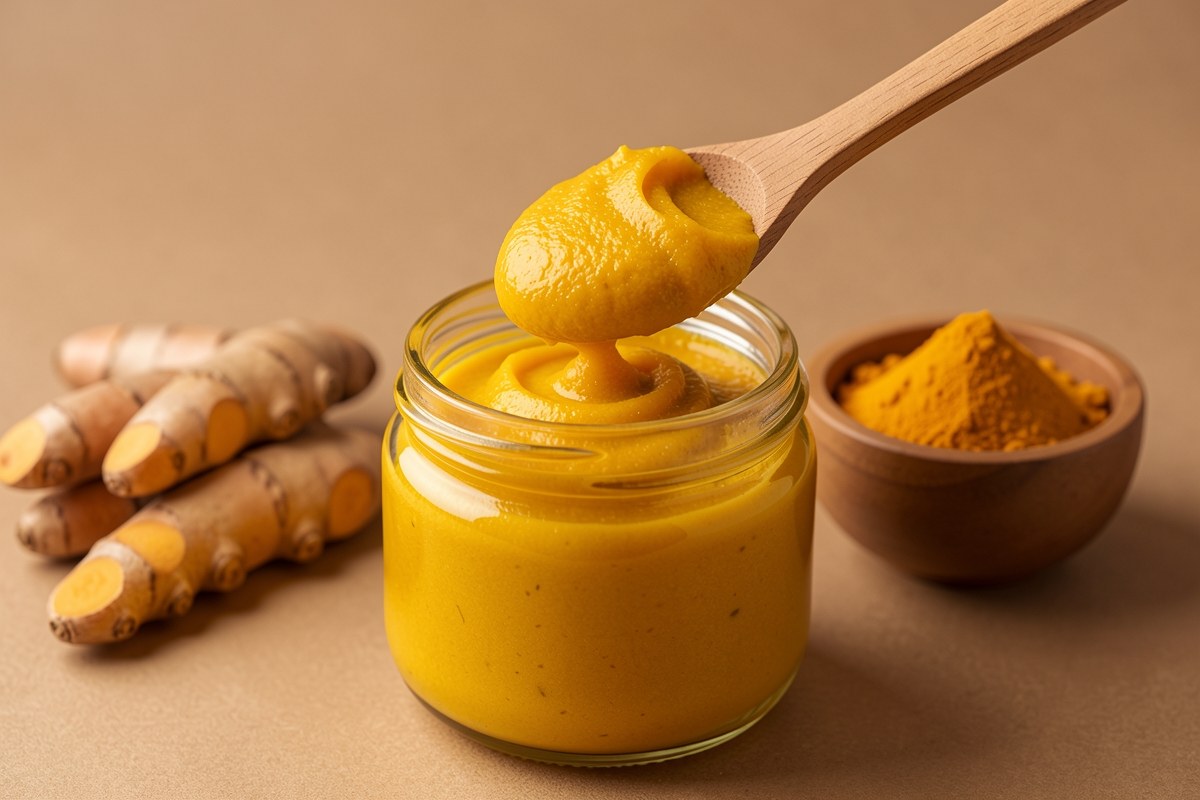
Turmeric paste, sometimes called golden paste, is a simple mixture of turmeric and water, cooked until thick. The most common recipe uses only two main ingredients: turmeric and water. Many versions also include a healthy fat like coconut oil and a pinch of black pepper.
For equipment, you'll need a small saucepan, a whisk or wooden spoon, a measuring cup, and a clean glass jar with a lid for storage. You'll also need a fine-mesh strainer if you use fresh turmeric root.
The exact amount of turmeric and water can vary, but a ratio of 1/2 cup turmeric powder to 1 cup water is common, with an additional 1 cup water kept in reserve to adjust consistency. If you're using fresh turmeric, you'll need about 6 ounces of root, which is roughly 1 cup when peeled and chopped.
Optional ingredients include freshly ground black pepper and coconut oil, which many recipes add at the end of cooking. Some variations also incorporate fresh ginger, cinnamon, or ghee, but these are not required for a basic paste.
- Turmeric (ground or fresh root)
- Water
- Coconut oil or other healthy fat (optional)
- Freshly ground black pepper (optional)
- Small saucepan, whisk or spoon, measuring cup
- Glass jar with lid for storage
| Ingredient | Amount (for ground turmeric) | Amount (for fresh turmeric) |
|---|---|---|
| Ground turmeric or fresh turmeric root | 1/2 cup (60 grams) | 6 ounces (about 1 cup peeled and chopped) |
| Water | 1 cup, plus up to 1 cup extra | 1 cup, plus up to 1 cup extra |
| Coconut oil (optional) | 2 tablespoons | 2 tablespoons |
| Black pepper (optional) | 1/2 teaspoon | 1/2 teaspoon |
Sources: Napa Valley Holistic Veterinary Services, Swanson Vitamins, Eat Drink Pure
Choosing Fresh Turmeric vs. Ground Turmeric
You can make turmeric paste from either ground turmeric powder or fresh turmeric root. Ground turmeric is more common and easier to find, and it works well for a smooth paste. Fresh turmeric has a brighter, more floral flavor and a vivid color, but it requires more preparation.
If using ground turmeric, the paste will thicken quickly, so you may need to add extra water from your reserve. If using fresh turmeric, plan to peel and chop the root, then simmer it in water until tender before blending. Some recipes combine both for depth of flavor.
Both types produce a paste that can be used interchangeably in most recipes, though the flavor profile might differ slightly. The choice often depends on what you have on hand and personal preference.
- Ground turmeric is convenient and cooks faster.
- Fresh turmeric offers a more vibrant taste and requires peeling and chopping.
- You can also use a combination of fresh and ground.
Sources: Eat Drink Pure
Step-by-Step Instructions with Tips
Making turmeric paste is straightforward, but a few tips ensure a smooth result. Start by combining turmeric and water in a saucepan. For ground turmeric, whisk the powder into the water to avoid lumps. For fresh turmeric, simmer the chopped root in water until it's soft enough to blend.
Cook the mixture over low to medium heat, stirring frequently, until it thickens into a paste. This typically takes 7 to 10 minutes. If the paste becomes too thick, add a little of the reserved water. If it seems too thin, continue cooking to evaporate excess liquid.
At the end of cooking, you can stir in coconut oil and freshly ground black pepper. The oil adds richness and helps create a smooth, glossy texture. Black pepper is commonly added in these recipes.
Let the paste cool completely before transferring to a jar. This prevents condensation and helps maintain its texture.
- Measure your turmeric and water (e.g., 1/2 cup ground turmeric to 1 cup water).
- Combine turmeric and water in a small saucepan. Whisk until no dry powder remains.
- Place the pan over medium heat and stir constantly until the mixture starts to simmer.
- Reduce heat to low and continue cooking, stirring every minute or so, until the paste thickens (about 7–10 minutes).
- If the paste looks too dry, add extra water one tablespoon at a time until it reaches a smooth, thick consistency.
- Remove from heat and stir in optional coconut oil and black pepper.
- Cool completely, then transfer to a clean glass jar with a lid.
Sources: Napa Valley Holistic Veterinary Services, Swanson Vitamins
How to Store and Preserve Turmeric Paste
Proper storage is essential to prevent spoilage. Refrigerated turmeric paste typically lasts up to two weeks. Always use a clean utensil to scoop out paste, and keep the jar tightly sealed.
For longer storage, you can freeze turmeric paste. Freeze it in ice cube trays or small portions, then transfer the frozen cubes to a freezer-safe bag or container. Frozen paste can be kept for longer, though the texture may change slightly after thawing.
Glass jars are commonly used for storing turmeric paste, and they are safe as long as they are clean and have tight-fitting lids. Avoid metal containers, as turmeric can react with some metals. If you freeze in glass, leave headspace to allow for expansion, and thaw in the refrigerator.
- Refrigerator: up to 2 weeks in a sealed jar
- Freezer: freeze in portions (e.g., ice cube trays), then store in a freezer bag for longer storage
- Always use clean, dry utensils to avoid introducing moisture or bacteria
Ways to Use Turmeric Paste in Recipes
Turmeric paste is a convenient way to add turmeric to many dishes. Unlike ground powder, which can clump, paste mixes easily into liquids and batters. It's often used in curries, sauces, soups, and even smoothies.
You can stir a spoonful into a creamy turmeric chicken skillet for added depth, or use it as a base for golden milk. The paste also works well in rice dishes, roasted vegetables, marinades, and salad dressings.
Because the paste already contains water, you may need to adjust the amount of other liquids in your recipe. Start with a small amount, about one teaspoon per serving, and taste as you go.
- Stir into curries, soups, or stews at the end of cooking.
- Mix into smoothies or warm drinks like golden milk.
- Use as a marinade for chicken or tofu.
- Add to rice or quinoa cooking water for color and flavor.
Sources: Napa Valley Holistic Veterinary Services, Swanson Vitamins
Choosing Coconut Oil for Turmeric Paste
Coconut oil is a popular optional addition to turmeric paste. Many recipes include about 2 tablespoons of coconut oil per batch, stirred in at the end of cooking. The oil helps create a smooth, spreadable texture and adds a subtle flavor.
If you prefer not to use coconut oil, you can substitute other healthy fats like ghee or olive oil, though the taste will vary. The choice depends on your dietary preferences and the dishes you plan to use the paste in.
When adding coconut oil, make sure it is fully melted and well incorporated. This helps the paste stay homogeneous and easy to use.
- Typical amount: 2 tablespoons per batch (with 1/2 cup turmeric powder)
- Stir in after cooking, while the paste is still warm
- Can substitute other oils or ghee if preferred
Sources: Napa Valley Holistic Veterinary Services, Swanson Vitamins, Eat Drink Pure
Frequently asked questions
Can I use ground turmeric instead of fresh?
Yes, ground turmeric is the most common choice and works well. Use 1/2 cup of ground turmeric for every 1 cup of water, and cook until thick. Fresh turmeric requires more preparation but offers a different flavor.
Sources: Napa Valley Holistic Veterinary ServicesHow long does turmeric paste last in the fridge?
Refrigerated turmeric paste can be kept for up to 2 weeks. Always use clean utensils and keep the jar sealed.
Sources: Napa Valley Holistic Veterinary ServicesCan I freeze turmeric paste?
Yes, freezing turmeric paste is a way to store it for longer. Portion it into ice cube trays, freeze until solid, then transfer the cubes to a freezer bag. Frozen paste can be kept for several months.
Sources: Napa Valley Holistic Veterinary ServicesWhat is the ratio of turmeric to liquid?
A common ratio is 1/2 cup ground turmeric to 1 cup water, with an additional 1 cup water held in reserve to adjust consistency. For fresh turmeric, you may use about 6 ounces of root to 1 cup of water.
Sources: Napa Valley Holistic Veterinary ServicesDoes turmeric paste stain?
Turmeric has a deep yellow color that can stain. It is advisable to use glass or stainless steel containers and clean spills promptly. Wearing an apron while cooking can help protect clothing.
Sources: Napa Valley Holistic Veterinary ServicesCan I add oil or pepper to the paste?
Yes, many recipes include coconut oil or another fat and freshly ground black pepper, stirred in at the end of cooking. These are optional and add flavor and richness.
Sources: Napa Valley Holistic Veterinary ServicesWhat recipes can I add turmeric paste to?
You can add turmeric paste to curries, soups, stews, sauces, rice dishes, smoothies, and even baked goods. For a savory chicken skillet, stir in a spoonful toward the end of cooking. Always taste and adjust the amount.
Sources: Swanson VitaminsSources
- Golden Paste: Turmeric for Pets — Napa Valley Holistic Veterinary Services
- How to Make Turmeric Paste - Swanson Vitamins — Swanson Vitamins
- How To Make Turmeric Paste (Golden Paste) — Eat Drink Pure