Understanding Turmeric's Flavor: Earthy, Bitter, and Warm
Turmeric brings a warm, earthy character to dishes, with a pleasant bitterness that sets it apart from sweeter spices. Cooks often describe it as slightly peppery with subtle citrusy notes, making it a natural fit for savory cooking.
When raw, turmeric can taste astringent and sharp, which is why most recipes call for cooking it. Heat mellows the bitterness and brings out the deeper earthy flavors that make turmeric so versatile.
Its vibrant golden color also makes it a go-to for adding visual warmth to rice, soups, and sauces without overwhelming other ingredients.
- Earthy and pleasant bitter baseline.
- Notes of pepper and citrus.
- Astringent when raw; cooking softens the bite.
Sources: Forks Over Knives, Tasting Table, Oreate AI Blog
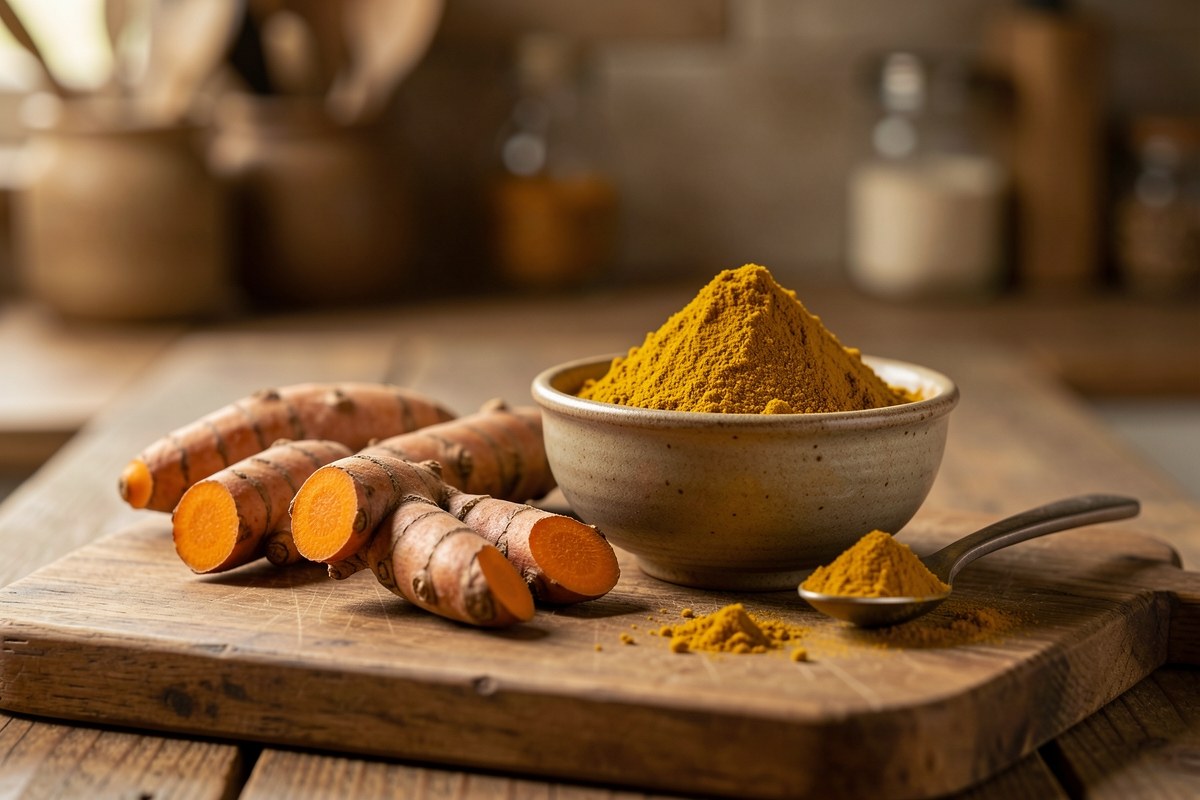
Fresh vs. Ground Turmeric: Choosing the Right Form
Choosing between fresh turmeric root and dried ground turmeric depends on your recipe and the flavor you want. Ground turmeric is more concentrated and has a drier, more assertive bitterness, while fresh root offers a milder, brighter profile with subtle citrus nuances.
Because the two forms differ in intensity, recipes often need adjustments when swapping one for the other. In general, one teaspoon of ground turmeric equals about one tablespoon of freshly grated turmeric root.
Think of ground turmeric as a spice to color and lightly flavor a dish, and fresh turmeric as an ingredient in its own right, often grated or chopped and treated more like ginger.
- Ground: earthy, concentrated, best for curries, soups, and dry rubs.
- Fresh: milder, aromatic, good in stir-fries, marinades, and fresh applications.
- Ratio: 1 teaspoon ground = 1 tablespoon fresh (grated).
Sources: iSpice Foods, Holy Cow Vegan, Forks Over Knives, Its Mooh
How to Prepare Fresh Turmeric Root
Fresh turmeric looks like a small, knobby ginger root and can be prepared in similar ways. Scrub the skin well, then grate or finely chop it. Peeling is optional if the skin is clean and thin, though some cooks prefer to remove it for a smoother texture.
For even distribution in sauces and dressings, grate fresh turmeric on a fine grater or microplane. For chunkier dishes, a rough chop or slice works fine.
Fresh turmeric stains easily, so use caution with hands and cutting boards—many cooks wear gloves or work on a surface they do not mind turning yellow.
- Scrub and optionally peel.
- Grate for sauces and marinades.
- Chop or slice for stir-fries and stews.
Sources: iSpice Foods, Forks Over Knives, Holy Cow Vegan
Activating Turmeric with Heat and Fat
Turmeric’s flavor and color develop when it is gently heated in oil or another fat, a step often called “blooming.” This technique reduces the raw bitterness and brings out the spice’s earthy depth.
To bloom ground turmeric, stir it into warm oil for about a minute before adding other ingredients. Watch it carefully, as it can burn and become acrid if overheated.
Adding a pinch of black pepper at the same time not only rounds out the flavor but also helps your body absorb curcumin more effectively, thanks to the piperine in pepper. This classic pairing is easy to remember: turmeric loves fat and pepper.
- Cook ground turmeric briefly in oil to mellow bitterness.
- Use moderate heat to avoid burning.
- Black pepper increases curcumin absorption.
Sources: Tasting Table, Holy Cow Vegan, Oreate AI Blog, iSpice Foods, Forks Over Knives
Turmeric Pairing Guide: Complementary Spices and Ingredients
Turmeric works beautifully alongside a wide range of spices and ingredients. It is a key player in many curry powders and spice blends, but it also stands alone with simple seasonings.
Common companions include ginger, cumin, coriander, and black pepper. Turmeric also absorbs well into dairy and coconut milk, making it a natural choice for creamy sauces and soups.
For vegetables, turmeric brings warmth to cauliflower, potatoes, and leafy greens. It also pairs with legumes such as lentils and chickpeas, which echo its earthy character.
- Ginger and garlic: classic aromatic base.
- Cumin and coriander: build curry flavor.
- Black pepper: enhances absorption and adds bite.
- Coconut milk or yogurt: smooths bitterness and adds richness.
- Cauliflower, potatoes, lentils, and rice: natural vechicles.
Sources: Holy Cow Vegan, Forks Over Knives, Tasting Table
Cooking Techniques: Infusing, Blooming, and Layering Turmeric
There are several effective ways to incorporate turmeric into a dish, and the method you choose affects the final flavor.
Blooming ground turmeric in oil is ideal for curries and sauces. Infusing fresh turmeric in hot liquids, such as broth or coconut milk, releases its flavor into the base. Layering turmeric—adding a little at the start of cooking and a little more toward the end—creates depth and ensures the flavor is not lost during long simmering.
In rice dishes, turmeric is often added to the cooking water or sautéed with grains before liquid is added. For salad dressings, grated fresh turmeric can be whisked directly into the oil and vinegar.
- Bloom ground turmeric in oil for a short time before adding other ingredients.
- Steep fresh turmeric in soups, broths, and coconut-based sauces.
- Layer turmeric at different stages to combine mellow and bright notes.
- For rice and grains, add turmeric to the cooking liquid or bloom with the grains.
Sources: Holy Cow Vegan, Tasting Table, iSpice Foods, Forks Over Knives
Turmeric in World Cuisines: From Indian Curries to Caribbean Dishes
Turmeric is a cornerstone in many culinary traditions. In Indian cooking, it is essential in curries, dals, and vegetable dishes. Moroccan tagines use it alongside other warm spices for a subtle color and earthiness.
It also appears in Caribbean stews and jerk seasonings, where it contributes a golden hue and mild bitter note that balances fiery flavors. In the United States, turmeric is a familiar ingredient in prepared yellow mustard and some pickles, giving them their characteristic color.
No matter the cuisine, turmeric’s role is to add warmth, depth, and a sunlit color that makes dishes look as inviting as they taste.
- Indian curries and lentil dishes.
- Moroccan tagine spice blends.
- Caribbean stews and jerk seasonings.
- American mustard and pickle brines.
Sources: Forks Over Knives, Tasting Table
Frequently asked questions
What is the difference between fresh and ground turmeric?
Fresh turmeric root is milder and less bitter, with a more aromatic, citrusy quality. Ground turmeric is more concentrated, earthy, and pleasantly bitter. Because ground turmeric is more potent, you typically need less of it than fresh.
Sources: iSpice Foods, Holy Cow Vegan, Forks Over KnivesHow much turmeric should I use in a recipe?
Recipes vary, but a common starting point is 1/4 to 1/2 teaspoon of ground turmeric per serving. If you are substituting fresh root, use about one tablespoon of freshly grated turmeric for each teaspoon of ground turmeric called for.
Sources: Its Mooh, Forks Over KnivesShould I buy turmeric as a root or as a powder?
It depends on your cooking habits. Ground turmeric is convenient, keeps well, and is ideal for dry spice blends, curries, and everyday seasoning. Fresh turmeric offers a milder, brighter flavor and is great when you want the texture and aromatic presence of the root. Many cooks keep both on hand.
Sources: iSpice Foods, Holy Cow VeganHow do I store fresh turmeric?
Fresh turmeric can be kept in the refrigerator for up to three weeks. For longer storage, freeze it for up to a year. You can freeze the whole root or grate it first and freeze in an airtight container.
Sources: iSpice Foods, Forks Over KnivesDoes turmeric need to be cooked?
Turmeric is almost always used in cooked dishes. Heat softens its astringent raw flavor and, when combined with oil, helps release its earthy notes. Cooking with a little oil and black pepper also makes curcumin more absorbable, so most recipes benefit from cooking turmeric rather than using it raw.
Sources: Holy Cow Vegan, Tasting TableSources
- A Guide On How to Cook With Turmeric [+ 5 Easy At-Home Recipes] — Its Mooh
- The Beginner’s Guide to Using Turmeric in Dishes – iSpice Foods — iSpice Foods
- What Turmeric Actually Does To Your Dishes — Tasting Table
- Cooking with Turmeric and Turmeric Uses - Holy Cow Vegan — Holy Cow Vegan
- Unveiling the Flavor of Turmeric: A Culinary Journey - Oreate AI Blog — Oreate AI Blog
- Turmeric 101: What It Tastes Like and How to Cook With It - Forks Over Knives — Forks Over Knives