Understanding the Building Blocks of a Great Turmeric Sauce
A great turmeric sauce starts with understanding its building blocks: fat, acid, salt, a liquid base, and the turmeric itself. Together, these components create a balanced sauce that enhances a dish without overwhelming it. Turmeric brings an earthy, slightly bitter warmth that pairs well with creamy and tangy bases. Fat helps carry turmeric's flavor, whether from olive oil, coconut milk, or tahini. Acid, such as lemon, lime, or vinegar, brightens the sauce and complements turmeric's bitterness. Salt ties everything together and amplifies other flavors.
The liquid base sets the character of the sauce. Coconut milk is a common choice for creamy, vegan sauces, as seen in recipes from Women's Running and Autoimmune Wellness. Yogurt provides a tangy base for cold sauces, as in the recipe from dolly and oatmeal. Tahini mixed with water creates a savory, nutty base, as demonstrated by Banyan Botanicals. Each base lends a different texture and flavor profile to the sauce.
Beyond turmeric, flavorings such as garlic, ginger, onion, cinnamon, and a touch of sweetener like maple syrup can round out the sauce. Citrus juice or vinegar adds needed acidity. Understanding these building blocks allows you to adjust a turmeric sauce to your taste and to pair it successfully with different foods.
Sources: Women's Running, Autoimmune Wellness, Banyan Botanicals, dolly and oatmeal
Essential Tools and Ingredients
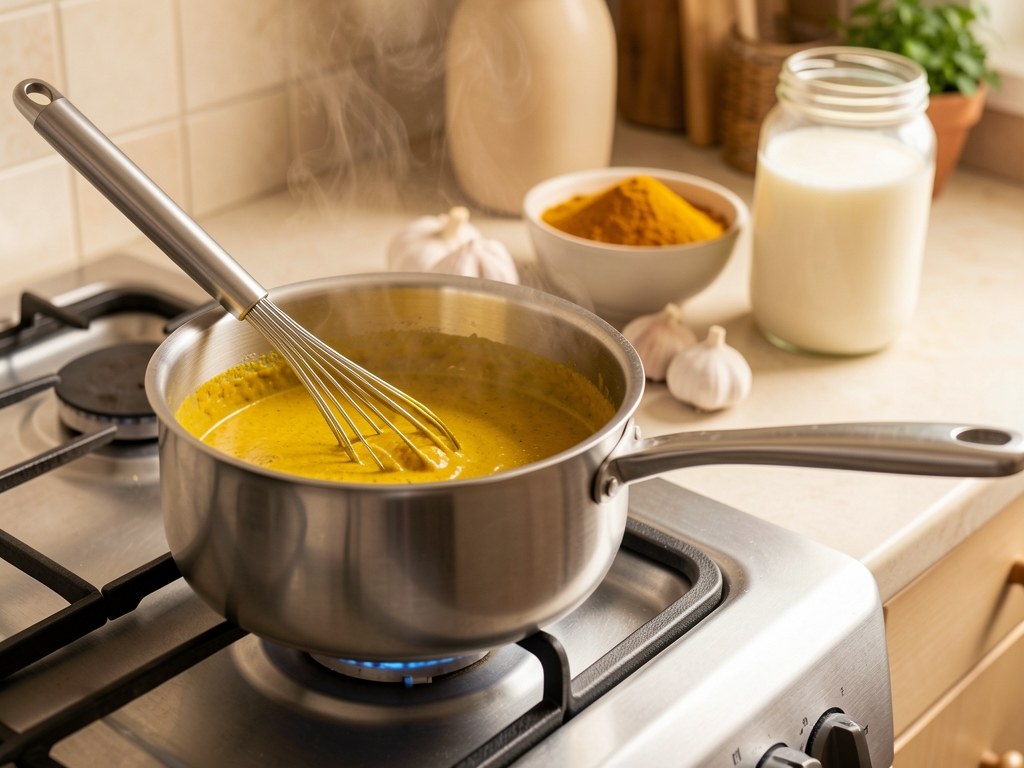
You may already have most ingredients for turmeric sauces. For a basic creamy sauce, you will need olive oil, onion, garlic, curry powder, turmeric, and coconut milk. For a cold yogurt sauce, reach for plain yogurt (dairy or plant-based), tahini, apple cider vinegar, fresh or ground turmeric, garlic, and a touch of maple syrup.
Essential tools include a skillet or saucepan for simmering, a blender (immersion or regular) for smooth pureed sauces, and a whisk for mixing. A fine grater is helpful when using fresh turmeric; also keep measuring spoons on hand.
Turmeric is available ground or fresh. Ground turmeric is convenient, but fresh turmeric offers a brighter, almost gingery flavor, as used in some cold sauces. Regardless of form, turmeric can be "bloomed" in hot oil for a minute or two to deepen its flavor, a technique seen in recipes such as EverydayMaven's turmeric-cilantro magic sauce.
For liquid, recipes vary: coconut milk is common in creamy vegan sauces, while yogurt is the base for cold tangy versions. Broth can be used in savory pan sauces. The choice depends on the flavor you want.
Basic Method: A Simple Creamy Turmeric Pan Sauce
A simple creamy turmeric pan sauce is a great starting point. This method, inspired by a coconut milk sauce from Women's Running, yields a smooth, rich sauce that pairs with chicken, rice, or roasted vegetables.
Start by sautéing finely chopped onion in olive oil over medium heat until soft and translucent. Add minced garlic, and cook briefly. Then add curry powder, ground turmeric, and a pinch of cayenne if you like heat. Stir constantly for about one minute; this brief cooking, called blooming, releases the spices' flavors.
Pour in coconut milk and stir to combine. Bring the mixture to a gentle simmer and let it cook for about 10 minutes, stirring occasionally. The sauce will thicken slightly and the flavors will meld. After simmering, allow it to cool slightly, then blend until perfectly smooth. An immersion blender works well, or transfer to a regular blender in batches. Season with salt to taste.
- Sauté onion in olive oil until soft.
- Add garlic, curry powder, turmeric, and optional cayenne; cook about 1 minute.
- Stir in coconut milk and simmer for 10 minutes.
- Blend until smooth and season.
Sources: Women's Running
Turmeric Yogurt Sauce: Cold and Tangy
For a cold sauce that adds a tangy kick to grain bowls, roasted vegetables, or grilled chicken, a yogurt-based turmeric sauce is simple to whisk together. This version, adapted from dolly and oatmeal's garlic-turmeric sauce, does not require cooking.
In a bowl, whisk together yogurt (you can use dairy or plant-based), tahini, apple cider vinegar, turmeric (fresh finely grated or ground), minced garlic, and a little maple syrup for balance. Season generously with salt and black pepper. The tahini thickens and adds nuttiness, while the vinegar and maple syrup provide tang and sweetness. Mix until smooth and creamy.
Keep in mind that this sauce is not heated, so the turmeric flavor remains robust and bright. If using fresh turmeric, grate it finely; if using ground, start with a smaller amount and taste. Adjust the seasonings to your preference.
- Yogurt, tahini, vinegar, turmeric, garlic, maple syrup.
- Whisk until smooth.
- Season with salt and pepper.
- Refrigerate until ready to serve.
Sources: dolly and oatmeal
Vegan Turmeric Sauce using Coconut Milk
A rich, creamy vegan turmeric sauce often uses coconut milk as the base. Two recipes highlight different approaches: one simmers onion, garlic, and spices in coconut milk (as above, from Women's Running), and another incorporates sweet potato for body and natural sweetness, from Autoimmune Wellness that includes coconut milk, turmeric, ginger, cinnamon, and lemon.
The sweet potato version involves simmering peeled and cubed sweet potato in coconut milk along with turmeric, fresh ginger, cinnamon, and a pinch of salt until the potato is soft, typically about 10 minutes. Then transfer to a blender, add a squeeze of lemon, and puree until silky. This sauce is luxurious, lightly sweet, and pairs with roasted chicken, sweet potatoes, or as a base for stir-fries.
Another option is to make a thicker sauce with tahini and sesame, as in Banyan Botanicals' savory turmeric sauce. Toasting sesame oil, then whisking in tahini, water, miso paste, liquid aminos, maple syrup, turmeric, and lemon or lime juice creates a savory, nutty sauce that is dairy-free. This version uses tahini as a thickening agent and is excellent over grains or roasted vegetables.
- Coconut milk versions: simmer with aromatics and spices, then blend.
- Sweet potato adds creaminess without dairy.
- Tahini-based sauce: combine tahini, water, miso, aminos, maple, turmeric, citrus.
Sources: Women's Running, Autoimmune Wellness, Banyan Botanicals
Thickening and Flavoring Your Sauce: Spices
Thickening a turmeric sauce can be achieved through several methods. The most common is simmering: as the sauce cooks, evaporation concentrates the sauce and thickens its texture. Both the coconut milk sauce and sweet potato sauce call for a 10-minute simmer, which also helps meld flavors.
Blending is another way to achieve a smooth, thick texture. Pureeing ingredients like roasted vegetables or coconut milk creates an emulsion that feels velvety in the mouth. Tahini and yogurt also act as thickeners by adding body and richness.
Flavoring your turmeric sauce goes beyond just turmeric. Common companions include garlic, ginger, onion, cinnamon, and even a touch of sweetener like maple syrup to balance bitterness. Citrus juice or vinegar adds needed acidity. You can experiment with different spices such as curry powder to create a more complex profile.
Once prepared, turmeric sauces store well. The yogurt-based sauce from dolly and oatmeal keeps in the refrigerator for up to one week. Other creamy sauces can also be refrigerated for several days. If you plan to batch-cook, make a larger amount and store it in airtight containers—a technique supported by EverydayMaven, which notes that such sauces are good candidates for batch-cooking.
Sources: Women's Running, Autoimmune Wellness, Banyan Botanicals, dolly and oatmeal, EverydayMaven
Troubleshooting: Preventing Curdling, Lumps, or Separating
Three common issues can arise when making turmeric sauces: curdling, lumps, and separating. Let us address each.
Curdling often occurs in dairy-based sauces when acid or heat causes the milk proteins to separate. To prevent curdling in yogurt sauces, use full-fat yogurt and avoid high heat. For example, when making a yogurt sauce, you typically whisk it cold and never boil it, so the yogurt stays smooth. If you are adding yogurt to a warm dish, stir it in gently at the end and do not let it boil.
Lumps often come from not blending thoroughly or from adding powdered spices to liquid without first making a paste. To avoid lumps, whisk spices into a small amount of liquid to create a slurry before adding to the sauce. Also, blending the sauce well can eliminate any lumps from vegetables or spices.
Separation—when the sauce splits into layers—can happen with oil-based or coconut milk sauces if they are overheated or not adequately emulsified. Stirring regularly and maintaining a gentle simmer can help keep the sauce unified. Blending after cooking also creates a stable emulsion, as seen in both the coconut milk and sweet potato versions.
- Curdling: use full-fat dairy, avoid high boil, stir yogurt in at end.
- Lumps: make a slurry with spices, blend thoroughly.
- Separating: stir often, simmer gently, blend to emulsify.
Sources: Women's Running, Autoimmune Wellness, Banyan Botanicals, dolly and oatmeal
Frequently asked questions
What is the best liquid to use for a turmeric sauce?
The best liquid depends on the type of sauce you want. Coconut milk is a rich, creamy, dairy-free option used in recipes like the one from Women's Running. Yogurt creates a cold, tangy sauce as in dolly and oatmeal's version. For a savory sauce, a tahini and water base, as in Banyan Botanicals' recipe, works well. Broth can also be used for a lighter pan sauce, though none of the cited recipes call for it directly.
Sources: Women's Running, Banyan Botanicals, dolly and oatmealCan I make turmeric sauce ahead of time?
Yes, turmeric sauce can be made ahead. The yogurt-based sauce from dolly and oatmeal stores in the refrigerator for up to one week. Creamy coconut milk sauces are also suitable for refrigeration for several days, based on their ingredients. If you plan to use the sauce within a few days, making it ahead is convenient.
Sources: dolly and oatmealHow can I make my turmeric sauce spicier?
To add heat, you can include a pinch of cayenne pepper or a finely minced fresh chile. The coconut milk sauce from Women's Running calls for optional cayenne to introduce a kick. For a fresh, raw heat, the turmeric salsa described by Food52 includes minced chile.
Sources: Women's Running, Food52What is the difference between a pan sauce and a gravy?
A pan sauce is typically made in the same pan used for cooking meat or vegetables, using the browned bits and a liquid to create a quick sauce. It is often not thickened with flour. A gravy usually relies on a roux or another starch thickener and may be served with roasts. Turmeric pan sauces are more fluid and lighter.
Which dishes pair well with turmeric sauce?
Turmeric sauces pair well with a variety of dishes. The coconut milk sauce, as in the Women's Running recipe, is suggested over chicken or grains. The sweet potato-based sauce from Autoimmune Wellness can be served over proteins, vegetables, or used as a stir-fry base. The cold yogurt sauce from dolly and oatmeal is suited for grain bowls or as a dip, and the tahini-based sauce from Banyan Botanicals complements grains and roasted vegetables.
Sources: Women's Running, Autoimmune Wellness, Banyan Botanicals, dolly and oatmealSources
- [Video] Turmeric Sauce Recipe from Elyse Kopecky — Women's Running
- Golden Turmeric Sauce - Autoimmune Wellness — Autoimmune Wellness
- Brighten Up Your Winter with This Savory Turmeric Sauce Recipe – Banyan Botanicals — Banyan Botanicals
- GARLIC-TURMERIC SAUCE — dolly and oatmeal — dolly and oatmeal
- Turmeric Cilantro Magic Sauce - EverydayMaven™ — EverydayMaven
- A POWerful Turmeric Sauce that Staves Off Bland Food and Blank Slates — Food52